
Black Hat SEO: What it is, How it Works, & Why You Should Avoid it?
Black Hat SEO
Black Hat SEO uses unethical tactics to manipulate search engines for quick rankings. It violates search guidelines, risks heavy penalties, and focuses on short-term gains instead of genuine user value.



What is Black Hat SEO?
Black hat SEO is the practice of breaking search engine rules in order to get higher rankings quickly. A lot of the time, these methods don't care about the user experience and only try to fool search engine algorithms.
Black hat SEO uses shortcuts that can get you in trouble or even get your site removed from search results. White hat SEO, on the other hand, focuses on creating useful content and a good user experience.
Why do People Use Black Hat SEO?
The appeal is clear: quick results. In markets with a lot of competition, the promise of quick rankings and more traffic can be hard to resist.
But these short-term benefits don't last very long. Search engines are always making their algorithms better at finding and punishing black hat behavior. This often causes long-term damage that is worse than any short-term gains.

Some Common Black Hat SEO Methods
These are some of the most common black hat SEO tricks:
Stuffing keywords: Putting too many keywords on a page to change its ranking. This makes the content awkward and unnatural, which drives users away.

Hiding: Showing search engines different content than users. For instance, showing crawlers content that is full of keywords but hiding it from people who come to the site.
Links and text that are hidden: Using text that is the same color as the background, very small font sizes, or putting links or keywords off-screen so that users can't see them but search engines can.
Schemes for Links: Joining link farms, buying backlinks, or using private blog networks (PBNs) to make a site look more important than it really is.
Scraping and spinning content: Copying content from other sites or using automated tools to "rewrite" content in a way that doesn't make it better. This leads to thin or duplicate content that doesn't add much value.
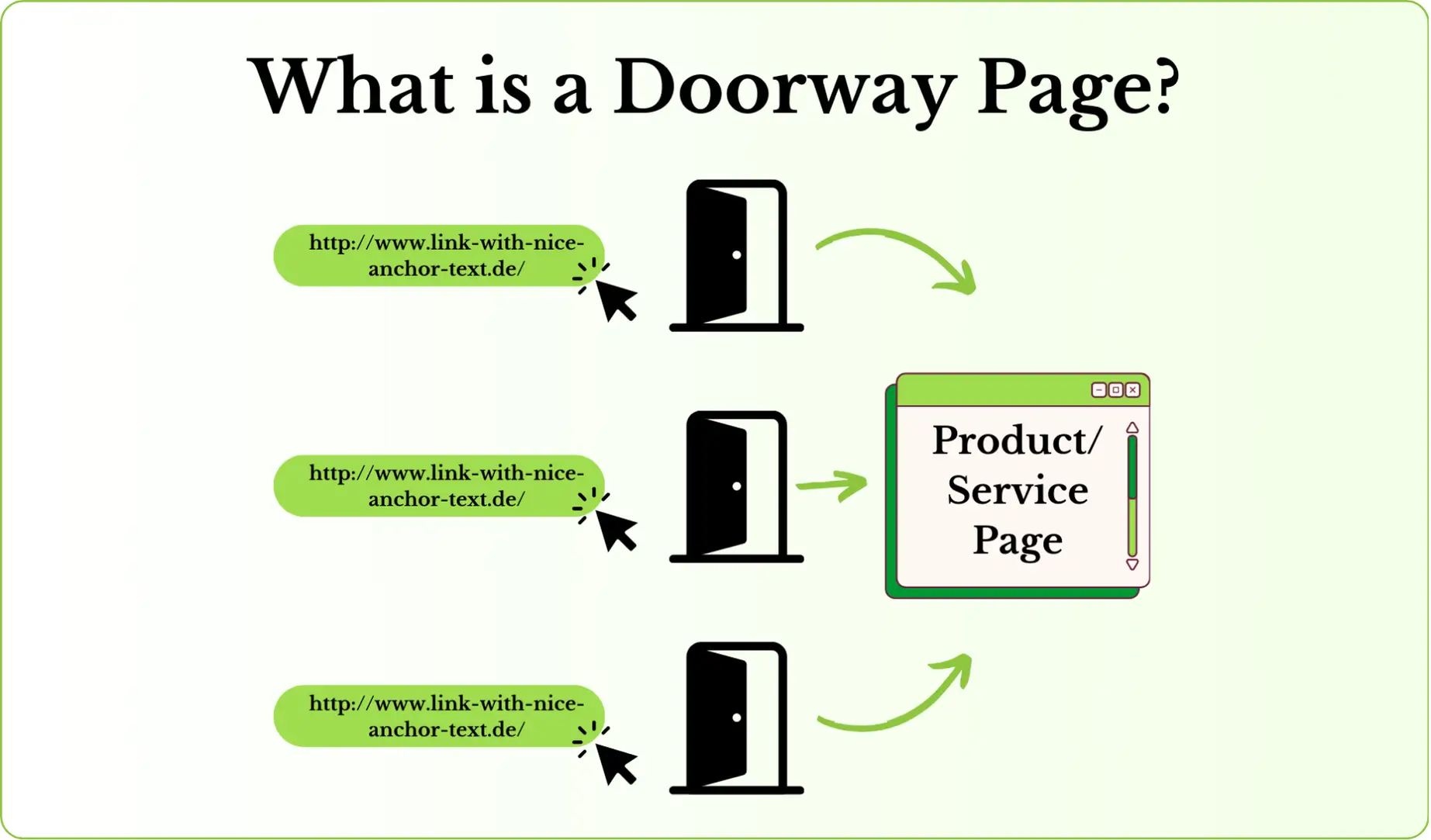
Pages for Doorways: Making low-quality pages that are meant to rank for certain keywords but then send users to a different page. These don't have much useful information.
What are The Risks of Black Hat SEO?
Search engines are very strict about rule-breaking and quickly punish sites that use dishonest methods.
Some of the punishments are:
Algorithmic penalties: Updates like Google Penguin are meant to stop people from doing things that are spammy or dishonest.
Loss of traffic and sales: If your rankings drop quickly, you may not be as visible, get fewer visitors, and lose sales.
Brand reputation damage: If users have a bad experience or you use dishonest methods, they may lose faith in your brand.
How to Find Black Hat SEO on Your Site?
Are you unsure if your site or your SEO provider is using shady methods? Here are some things to watch out for:
Using too many keywords or writing in a way that doesn't sound natural.
A lot of backlinks from sites that aren't very good or don't have anything to do with yours.
Content that is the same or not very valuable on more than one page.
Content that looks different to people and search engines.
Warnings about manual penalties in Google Search Console.
How to Recover from a Black Hat Penalty?
Step | Action | Purpose |
|---|---|---|
1. Identify the Penalty | Check Google Search Console for manual actions or sudden traffic drops. | Understand if it’s a manual or algorithmic penalty. |
2. Audit Your Website | Review backlinks, content, and SEO practices to spot manipulative tactics. | Find the root causes of the penalty. |
3. Remove or Disavow Bad Links | Delete spammy backlinks or submit a disavow file to Google. | Eliminate harmful link associations. |
4. Clean Up Low-Quality Content | Delete or rewrite duplicate, thin, or keyword-stuffed pages. | Improve content quality and trustworthiness. |
5. Fix Technical Issues | Ensure site speed, mobile usability, and proper indexing. | Restore overall site health and user experience. |
6. Submit a Reconsideration Request | If penalized manually, explain your clean-up steps to Google. | Request Google to lift the penalty. |
7. Follow Ethical (White Hat) SEO Practices | Focus on valuable content, quality links, and good user experience. | Prevent future penalties and build long-term growth. |
Final Thoughts
Black hat SEO might look good because it promises quick rankings, but the risks of being punished and hurting your site in the long run are just not worth it. Knowing what black hat SEO is and how to stay away from it will keep your website and business safe.
Make sure that your SEO strategy is based on strong, moral principles. Give users real value, follow the rules set by search engines, and your site will grow in a healthy way.
Frequently Asked Questions (FAQs)
Can black hat SEO permanently damage a website?

Yes, black hat SEO can cause permanent damage to a website’s online presence. In extreme cases, Google may completely remove your site from its index (deindexing), meaning your website will no longer appear in search results at all. Even if recovery is possible, it can take months of cleanup, link removal, content fixes, and reconsideration requests. During this time, you may lose traffic, sales, and brand trust, which can be very difficult to rebuild.
How long does it take for Google to detect black hat SEO?
There is no fixed timeline. Google can detect black hat tactics within a few days through algorithm updates, or it may take several months through manual review processes. Many site owners mistakenly believe that if they are not caught immediately, they are safe. In reality, Google constantly improves its detection systems, and penalties often arrive long after the damage has already been done.
Can competitors hurt my website using black hat SEO?
Yes, competitors can attempt to harm your site using negative SEO, which typically involves sending spammy backlinks to your domain. While Google has become much better at ignoring such attacks automatically, it is still important to monitor your backlink profile regularly. Using Google Search Console and third-party SEO tools can help you spot unusual activity early, and the Disavow Tool can be used if necessary.
What’s the biggest mistake businesses make with black hat SEO?
The biggest mistake is prioritizing short-term traffic over long-term stability. Many businesses fall for promises like “page one in 7 days” without understanding the long-term risk. Once Google identifies a site as untrustworthy, every future SEO effort becomes harder. Restoring trust takes significantly more time, money, and effort than building authority the right way from the beginning.
How can I make sure my SEO agency isn’t using black hat tactics?
You should always demand full transparency from your SEO provider. Ask for detailed backlink reports, content samples, and access to Google Search Console. A trustworthy agency will clearly explain where your links come from and how content is created. Be cautious of agencies that guarantee instant results or refuse to share their process, as these are strong warning signs of black hat practices.
Can a site recover after a Google penalty?
Yes. By removing harmful links, fixing content issues, and following white hat SEO, most websites can regain rankings over time.



4.9/5 Ratings!

Share this article