

What is Quality Score in Google Ads & How to Boost it?
Google Ad Quality Score
Quality Score shows how relevant your ads are. Higher scores improve ad rankings, lower cost per click, and help reach more people with the same budget.



What is Quality Score?
Quality Score is a number between 1 and 10. It shows how relevant your ad copy is to the person searching on Google. A score of 10 means your ad is great and matches what people want. A score of 1 means your ad needs big changes.
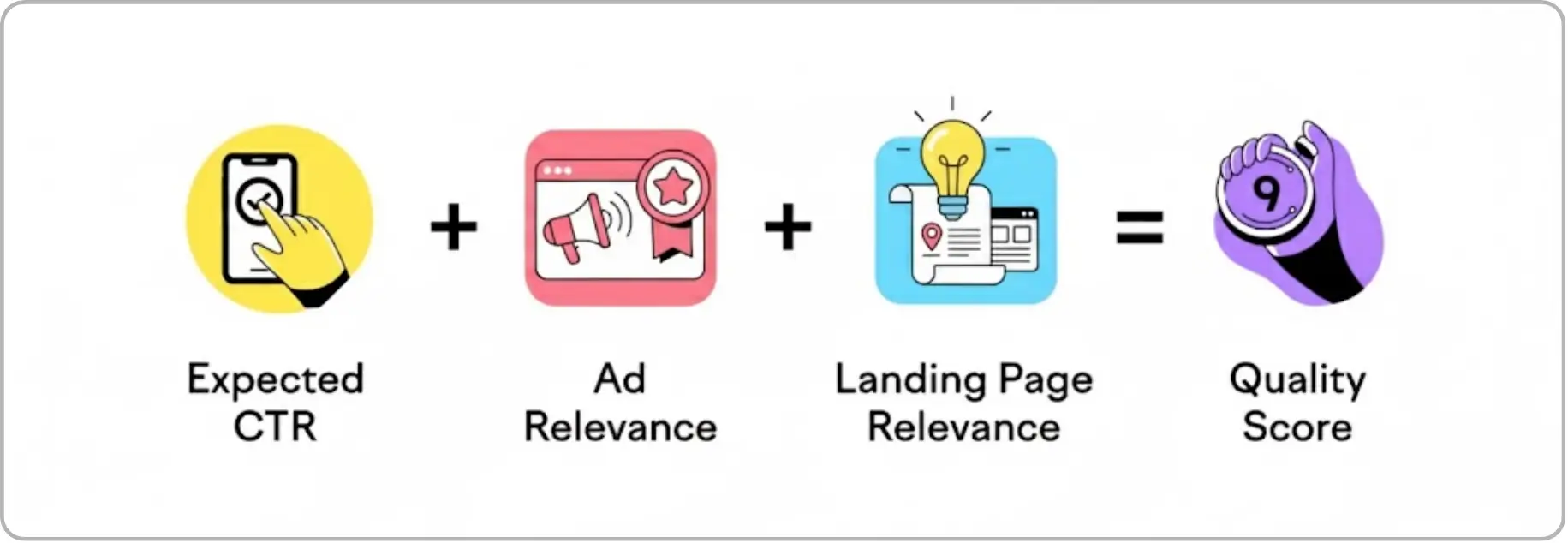
Google uses three things to decide your Quality Score:
Expected Click-Through Rate (CTR): This shows how often people click on your ad when they see it. If many people click, it means your ad looks useful and interesting.
Ad Relevance: This shows how well your ad matches the keyword or search term. If someone searches “cheap flights to Paris,” and your ad talks about “Flights to Paris,” it matches well.
Landing Page Experience: This shows how good your website is after someone clicks the ad. Your landing page should be easy to use, fast, and connected to what the ad promised.
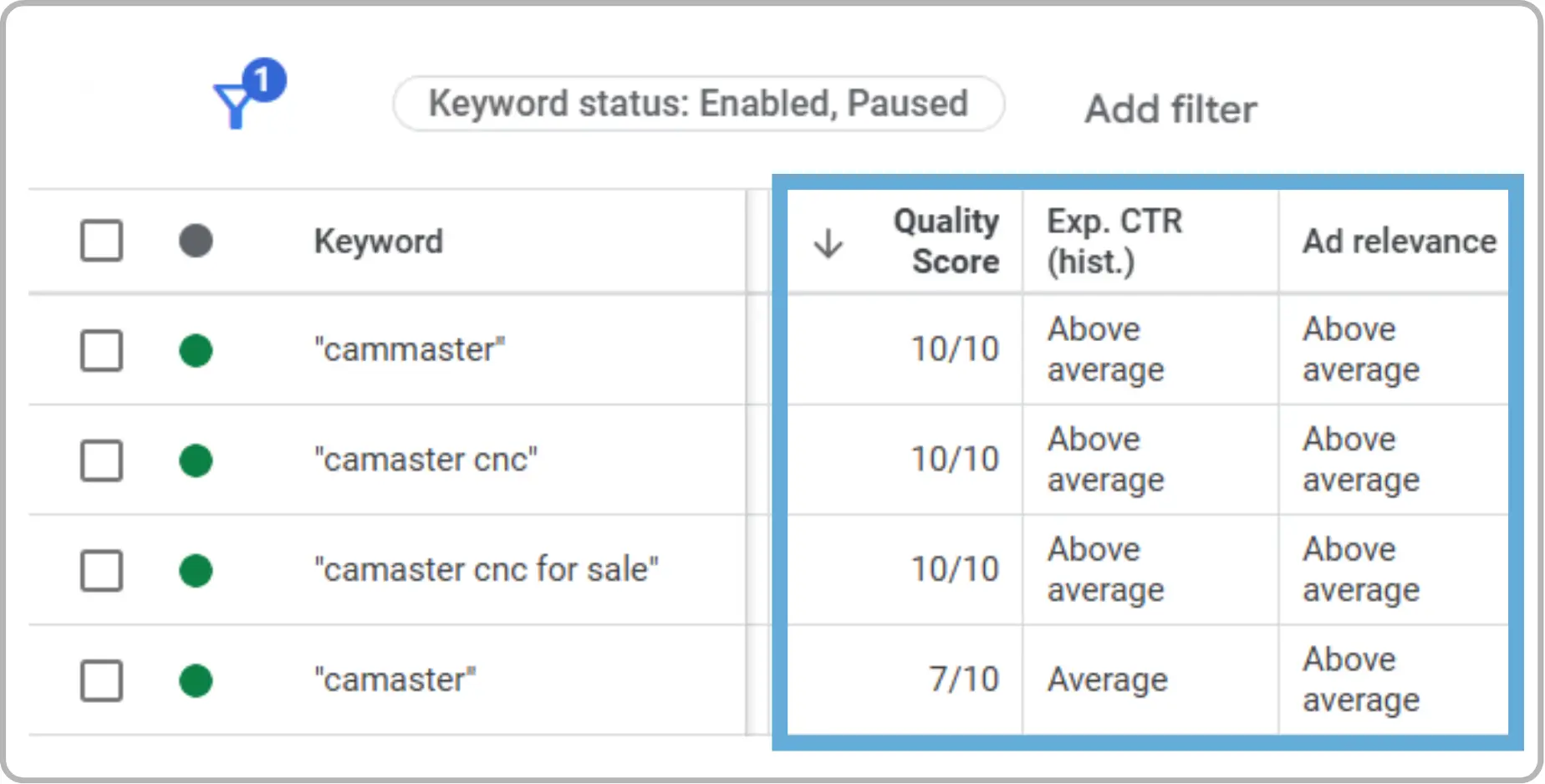
Each part gets rated as Above Average, Average, or Below Average. You can see these in your Google Ads account under the “Keywords” section.
Why Quality Score Matters?
Reason | Impact |
|---|---|
Higher Ad Rankings | Ads appear in better positions, increasing visibility and clicks. |
Lower Cost per Click (CPC) | You pay less for clicks while maintaining the same ad exposure. |
Better ROI | Efficient spending leads to more conversions for the same budget. |
Improved User Experience | Relevant ads and landing pages keep users engaged and satisfied. |
Competitive Advantage | High-quality ads outperform competitors even with lower bids. |
Example: Two businesses target the same keyword, “buy laptops.” One has a Quality Score of 9, and the other has 4. The one with 9 will pay less for every click and get better positions on the page.
So, if your Quality Score is low, your costs go up fast. If your score is high, your budget works harder.
What is a Good Quality Score?
In most cases:
7–10 is good
4–6 is average
1–3 means you need to fix your ads
Quality Score does not change overnight. It updates slowly as people interact with your ads. Keep improving it step by step.
You can check your score inside your Google Ads dashboard by adding the “Quality Score” column in the keywords report.
How to Improve Your Quality Score?
There are simple ways to raise your Quality Score. You do not need fancy tools or big changes. You only need focus, testing, and consistency.
Pick the Right Keywords
Use keywords that people are searching for. Avoid random or too broad words. Use Google Keyword Planner to find good matches.
Keep google ad groups small and focused. Each ad group should only target one main topic. Example: If you sell shoes, make separate ad groups like:
Men’s running shoes
Women’s sports shoes
Leather boots
When your ad group has focused on keywords, your ad text fits better, and your score goes up.
Write Simple and Direct Ads
People do not like long ads. They skip them.
Use short, clear sentences that tell what you offer.
Use action words like “Buy Now,” “Order Today,” or “Get Quote.”
Show your main value right away.
Example: “Buy Fresh Coffee Beans Online. Free Shipping. Fast Delivery.”
Avoid hard words and fancy phrases. The goal is to make people click because they understand what they get.
Make Your Landing Page Match the Ad
Your ad and your page must say the same thing. If your ad talks about “50% Off Shoes,” your landing page must show that offer clearly.
Your page should also:
Have a clear call-to-action button like “Buy Now” or “Add to Cart”
When users find what they expect, they stay longer, and your score improves.
Use Negative Keywords
Negative keywords stop your ad from showing wrong searches. If you sell “luxury bags,” add “cheap” or “free” as negative keywords. This prevents your ad from showing to people who are not your target.
It saves money and keeps your traffic more valuable.
Test Often
Do not run one ad forever. Make two or three versions and test them. Change one thing at a time, like the headline or call-to-action. See which version gets more clicks and better conversions.
Keep the ad that performs better. Testing helps you understand what your audience likes.
Use Ad Extensions
Ad extensions give more space to show information. They help people click faster because they see more links.
Types of ad extensions include:
Sitelinks (extra links to pages like “Contact” or “Pricing”)
Callout extensions (short phrases like “24/7 Support”)
Structured snippets (lists like “Free Delivery, Easy Returns”)
They improve your click rate and help raise your Quality Score.
Extra Tips to Keep a High-Quality Score
Keep checking your ad performance every week.
Remove low-performing keywords.
Improve your CTR by testing different headlines.
Keep your landing page updated.
Use simple, honest promises.
Example: If your ad says, “Next Day Delivery,” make sure it’s true. If users feel misled, they will leave fast, and your score will drop.

Common Mistakes to Avoid
Using too many different keywords in one ad group.
Sending all ads to the homepage instead of a specific page.
Forgetting test ads or pages.
Using fake offers.
Ignoring mobile users.
Avoid these mistakes to keep your Quality Score steady and strong.
Final Thoughts
Quality Score tells how useful your ads are to people. A better score means cheaper clicks, better ranking, and more results.
Focus on three things:
Make your ad relevant.
Match your landing page with the ad.
Give users a smooth, helpful experience.
When you care about your users, your Quality Score goes up naturally. Your ads perform better, your costs drop, and your campaigns bring better returns.
Start small. Check your ads. Fix what feels confusing. Simple changes can make a big difference to your Quality Score.
Frequently Asked Questions (FAQs)
Does Quality Score affect how often my ads appear on Google?

Yes. A high-Quality Score increases your eligibility to enter more ad auctions. This means Google trusts your ad to deliver a good user experience and gives it more visibility, even when your bids are lower. A low score can limit how often your ad shows, reducing impressions and traffic.
Can Quality Score help improve my conversion rate?
Indirectly, yes. When your Quality Score improves, your ads become more aligned with user intent, and your landing pages match the message of your ads. This leads to better-qualified traffic—people who are more likely to complete the action you want, such as buying, filling out a form, or calling.
How does user device or location impact Quality Score?
Google monitors performance by device and location. If your site performs poorly on mobile or if certain regions deliver weak engagement, those segments can reduce your overall expected CTR and lower Quality Score.
Does Quality Score influence impression share?
Absolutely. Impression share depends partly on ad relevance and CTR. If your Quality Score is low, you may lose impressions to competitors with higher scores, even if you have a strong budget. This results in missed opportunities and reduced market presence.
Is Quality Score calculated for campaigns or only for keywords?
Quality Score is calculated strictly at the keyword level, but its impact spreads across your ad groups and campaigns. Groups with many low-scoring keywords can weaken overall performance, so it’s important to monitor every keyword closely.
Does using broad match keywords lower Quality Score?
Not directly. Broad matches are not punished by Google. However, it often triggers irrelevant searches, which can reduce CTR and drive down your Quality Score over time. Using broad matches with smart bidding or tight negative keywords can help prevent this.
Does Quality Score apply to Shopping campaigns?
Shopping campaigns don’t use the 1–10 Quality Score system. However, Google still evaluates relevance, feed quality, product titles, and landing page experience—all of which influence how often your Shopping ads appear and how much you pay.



4.9/5 Ratings!

Share this article