
Why Featured Snippets Matter for Visibility?
Featured Snippets
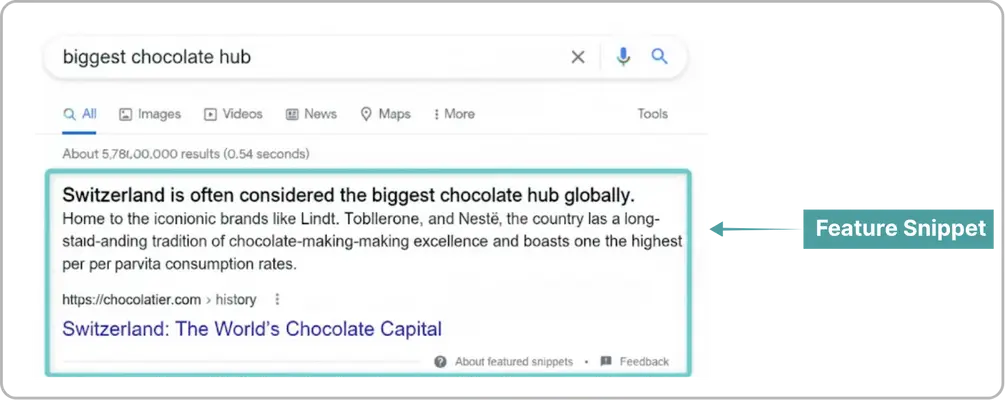
Featured snippets are brief answers shown at the top of Google’s search results, known as “Position Zero.” They give users quick, direct information—especially useful for mobile and voice searches.



What are Featured Snippets?
Featured snippets are special answer boxes that appear at the top of Google’s search results (often called “Position Zero”). Google automatically pulls content from a web page to answer a user’s question directly and shortly. The idea of featured snippets is to provide fast and useful answer to user, who otherwise have to click through multiple results.
Snippets can come in different formats: definitions, lists, tables, video, etc.
Featured snippets are valuable for several reasons:
Prime Visibility (Position Zero): Being in a featured snippet means your content appears above standard organic results. Even if you don’t have the #1 organic ranking, you can still outrank others by being shown in the snippet box.
Higher Click-Through Rates (CTR) & More Traffic: Because snippets grab attention, they tend to get more clicks. Even though some featured snippet results satisfy users immediately (leading to “zero-click searches”), for many queries people still click through for more detail.
Authority and Trust: Having Google put your content in the snippet is a tangible track of credibility for your site. Thus, the site gains credibility with users and search engines.
Better User Experience: People like getting answers quickly. Featured snippets deliver just that, fast, particularly when it comes to voice search or being mobile where users want quick information.
Types of Featured Snippets
Below are the main types of featured sinppets, with brief descriptions:
Type | What it looks like | Typical use-case |
|---|---|---|
Paragraph (Definition) Snippets | A short block of text (one to a few sentences) that defines or answers a query directly. E.g. “What is SEO?” | Good for “What is…”, “Who is…”, or general definitions. |
List Snippets | Either ordered (numbered) or unordered (bulleted) lists. Steps, tips, items. | For how-to queries, processes, or when several points need listing. |
Table Snippets | Data displayed in tabular form — comparisons, metrics, etc. | When comparing things (features, prices, stats) or when information is inherently tabular. |
Video Snippets | Video content (often YouTube) with a relevant timestamp showing in SERP. | Good for how-to demonstrations or visual walk-throughs. |
Featured Snippets vs Regular Page Traffic
Comparing the usual traffic coming through organic search (through pages coming into position) with that which you get or could get from featured snippets is very interesting.
Regular Organic Listings: These are your usual ranked links (positions 1, 2, 3, etc.). If you're #1, you typically get a good share of traffic for that keyword. But you’re still below any featured snippet if one exists.
Featured Snippet (Position Zero): This can sometimes take clicks away from the #1 organic link because it appears above it. For many queries, featured snippets increase the share of impressions and clicks. But in some cases, users get what they want from the snippet and do not click through, reducing traffic slightly but increasing brand visibility.
Studies show that about 12% of search queries have a featured snippet, and these snippets receive roughly 8–9% of clicks. Around one-third of featured snippets come from content that is already ranking in the #1 organic position. So, high organic rank still helps.
Some Facts & Best Practices
Featured snippets first appeared around 2014.
Many featured snippets are triggered by long-tail keywords (more specific queries). To get a featured snippet, it helps if your page is already on the first page of Google for that keyword.
Include Best Practices:
Organize content with headings proper (H2, H3 etc.)
Answering questions directly, concisely and user friendly(especially near the top of pages)
Formatting content to match the snippet type (e.g. include lists, tables, etc.)
Monitoring competitors’ snippets and improving upon what they do well.
Final Thoughts
Featured snippets do much more than spruce up the SERPs; they are actual strategic tools for visibility, traffic, and brand credibility. And when you optimize your content well to be worthy of the snippet, it can outrank other pages that are technically stronger in other metrics.
Frequently Asked Questions (FAQs)
What is “Position Zero” in Google search?
Position Zero refers to the prime spot at the top of search results where featured snippets appear. Unlike the standard #1 ranking, this space gives immediate visibility to users and can attract more clicks and brand recognition.
Do mobile searches affect featured snippet display?
Yes. Mobile searches often prioritize quick answers due to smaller screens and faster browsing behavior. Optimizing your content for mobile readability and concise answers increases the likelihood of being featured in mobile snippets.
How do I know if my page is eligible for a snippet?
Pages that rank on the first page of Google for question-based or long-tail keywords are most eligible. SEO tools like SEMrush or Ahrefs can track snippet opportunities, highlighting which pages could be optimized for Position Zero.
Can a snippet reduce traffic to my main page?
Sometimes. Users may get answers directly from the snippet, resulting in “zero-click searches.” However, the increased visibility builds brand awareness and authority, which often leads to long-term traffic and trust benefits.
How long should my snippet content be?
Paragraph snippets usually range from 40–60 words. List snippets often contain 3–10 items, while tables should present concise and clear data. The goal is to answer questions succinctly without overwhelming users.
Can my content lose a featured snippet even if my page ranking doesn’t drop?
Yes. Google may replace your snippet with another page if it provides a clearer, more concise, or updated answer. This can happen even if your page remains on the first page of search results. Continuous optimization is key to maintaining snippets.
How do I measure the success of my featured snippet optimization efforts?
Track metrics like snippet impressions, click-through rates, organic traffic, and keyword rankings using tools like Google Search Console, SEMrush, or Ahrefs. Increased brand visibility and engagement are key indicators of snippet success.



4.9/5 Ratings!

Share this article